

Right now you can buy a new laptop powered by an Nvidia processor. That would have been a wild statement a few years ago. But what’s even wilder is that these RTX Spark laptops aren’t for PC gamers, and PC gamers shouldn’t buy them.
That’s not to say they’re bad. The RTX Spark platform is impressive, even if it’s currently going through a bit of a teething phase. It’s phenomenally powerful, a true Windows alternative to Apple’s Arm chips. And of course it’s great at just about anything having to do with local “AI,” as that’s its primary purpose. For more info on that, check out Mark Hachman’s full review of the Surface Laptop Ultra, on the same platform.
But when most people think of an “Nvidia laptop,” they probably assume it’s for gaming. And the RTX Spark can do gaming. Quite a lot of gaming, in fact — the pre-release estimate that the integrated graphics run at “5070 level” is approximately on the money. I’ve found the initial testing on HP’s $3199 Omnibook 16 Ultra impressive, extremely so for integrated graphics.
Unfortunately, the price of these RTX Spark laptops — ranging from $2600 to $7000 at launch — simply makes them a poor proposition for anyone primarily interested in gaming. You’re paying a massive premium for the level of gaming performance you get, starting at about a thousand dollars more than an equivalent laptop with a discrete graphics card, and only going up from there.
Asus
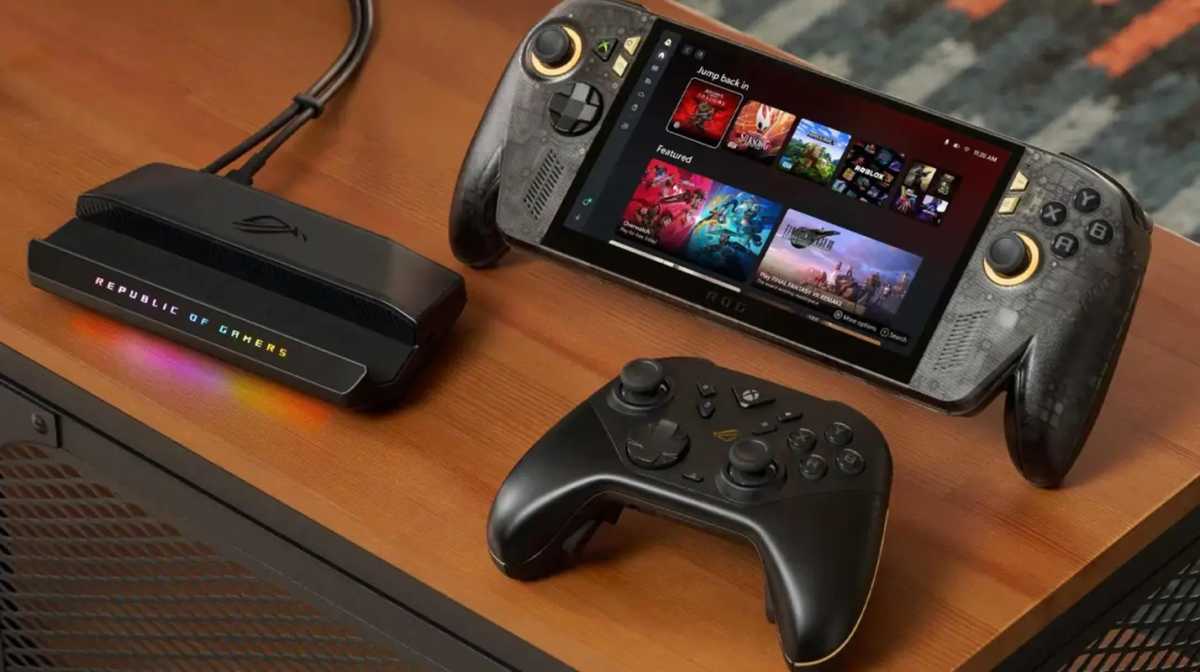
The RTX Spark is amazing. We didn’t need proof that integrated graphics could handle impressive gaming, not with the last few years of handhelds demonstrating it. But Nvidia may have proven that you can do it on Arm just as well, possibly better, than X64 chips. But you won’t be doing it on a budget, at least not with the initial chips and laptop designs.
One of the potential problems that cropped up with early Arm-based chips from Qualcomm going into Windows laptops was basic app compatibility. Windows users remember the problems with Windows RT… or perhaps I should say, one of the problems with Windows RT. But in the time since, and the rise of smartphones and other devices based on Arm chips, those seem to have largely been handled. I’d have no problem recommending an Arm laptop to anyone, especially if they prized battery life over power.
The big exception is gamers. Snapdragon laptops are, plainly, kinda crap at PC games, only handling older 2D titles with any deftness. So I was interested to see how Nvidia would handle this, since as a brand it’s intimately associated with PC games. In the lead-up to the RTX Spark launch, the company promised powerful games and “hundreds” of titles compatible right off the bat, prepared in cooperation with some of the biggest publishers and developers in the industry.
Michael Crider/Foundry
And not much else. If anything, Nvidia is being a little reticent with its gaming talk for these laptops, preferring to talk about core power and AI capabilities. It lets you know where the priorities are.
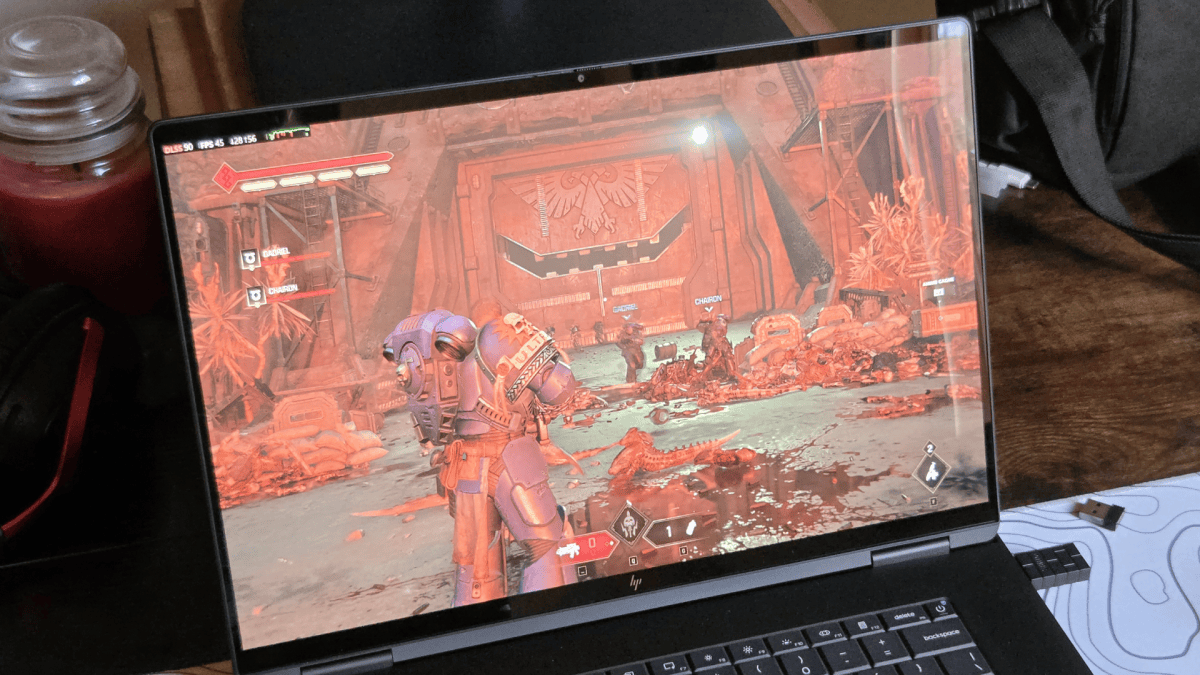
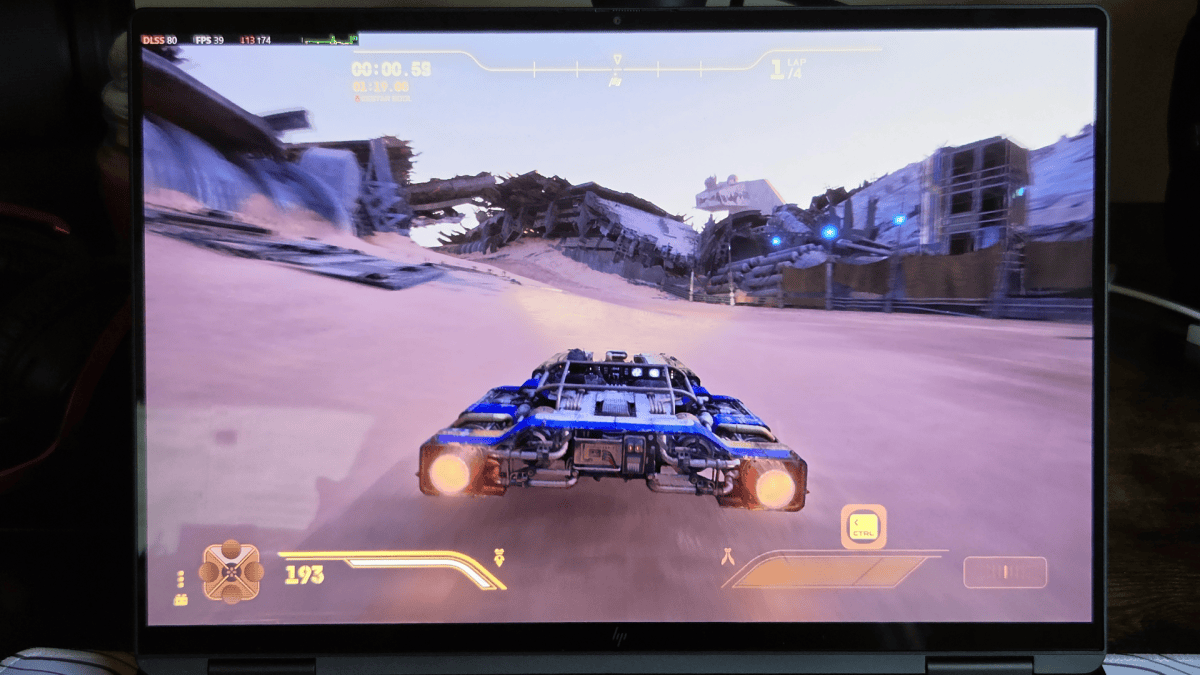
But anyway. If you’re worried about compatibility for RTX Spark laptops, you shouldn’t be. I tried to throw every curveball I could at the Omnibook, including visually spectacular titles like Space Marine II, brand new games (presumably without much testing on the new chips) like Galactic Racer, 2D games like Absolum, and positively ancient stuff from the deepest, darkest part of my Steam library.
The laptop installed and ran very nearly all of them without any issues at all. I ran into two notable problems: the original release of Skyrim (11/11/11, or if you’re outside the United States, 11/11/11) refused to launch. The remastered PC version from 2021 ran fine. I also couldn’t run the demo for Shadow of the Tomb Raider, a bit of a bummer since it has a good benchmark…but I’ve honestly never played it for myself. The only other issue I encountered was with Mount & Blade: Warband, a small but tricky DirectX9 game from 2010. It ran, but at about a quarter of the framerate I was expecting based on the other games I tried.
Michael Crider/Foundry
Everything else was fine. I was expecting to encounter far more problems, since PC game developers have never had any serious push to make Windows-compatible titles run well on Arm. Whatever else its priorities might be, Nvidia (with Microsoft’s likely help) has to be commended for nailing the game compatibility right at launch.
The Omnibook Ultra makes a good gaming laptop. With those compatibility concerns put aside, I was shocked at how well it handled all the games I threw at it. In short, yeah, it handles modern games of all stripes at about the same level as a laptop sporting a discrete RTX 5070 card… maybe a little less.
As it happens, PCWorld just published a gaming laptop review with a discrete RTX 5070 card, the MSI Stealth 16 AI+. That’s a conventional design with a Core Ultra 9 processor and 32GB of RAM, though it should be pointed out that with an integrated setup, the RTX Spark has to share system and GPU memory. Even so it was an opportunity for a very relevant head-to-head showdown.
The HP laptop with RTX Spark managed to beat the discrete GPU machine on Geekbench 7’s GPU test by a 5 percent margin, 113022 to 107232. On the CPU side in the same tool it was less powerful than the Core Ultra 9 386H, in single-core mode, 2143 to 2560. But it pulled ahead in multi-core by flexing those 20 Grace cores, 19599 to 15503. For more traditional graphics tests, I took a look at standardized 3DMark. Results were mixed, with RTX Spark unsurprisingly performing better on tests that had native Arm versions (Steel Nomad and Port Royal).
| 3DMark Tests | HP Omnibook 16 Ultra (RTX Spark) | MSI Stealth 16 AI+ (RTX 5070 laptop) |
| Steel Nomad (Vulkan) | 2945 | 3394 |
| Time Spy (DirectX 12) | 12580 | 14047 |
| Fire Strike (DirectX 11) | 21617 | 28597 |
| Port Royal (Ray Tracing) | 9128 | 8972 |
I’m guessing that the Spark is slightly hobbled in these tests by sharing memory between the system and GPU, but getting a boost on the ray tracing test thanks to some extra work put in by Nvidia on the newer chip. Suffice it to say, even if it’s not beating the RTX 5070 in most pure tests, it’s certainly within the ballpark.
For standard game benchmarks, I pulled out a different laptop that I happened to have handy, so I could make sure the variables in the benchmarks were exact. A Razer Blade 18 with a Core i9-13950HX, and a last-gen RTX 4080 (12GB VRAM on the laptop version of the card) should be fairly evenly-matched with this newer laptop, at least if we take Nvidia’s “5070” claims at face value. I’ll add for the sake of comparison that this laptop cost $3800 when it launched in 2023, and buying a new laptop with this GPU and approximately matching specs today would cost about $2500.
I normalized the tests on high settings, 1080p, fullscreen. For Cyberpunk I also added a ray tracing test, just to see if the newer chip has an advantage.
| Game | HP Omnibook 16 Ultra (RTX Spark) | Razer Blade 18 (13th gen i9/RTX 4080) |
| Horizon: Zero Dawn | 92 | 145 |
| Metro Exodus | 84.3 | 131.4 |
| Cyberpunk 2077 | 79.7 | 95.4 |
| 2077 Ray Tracing Overdrive | 35.1 | 55.8 |
So yeah, this RTX Spark laptop is getting pretty thoroughly beaten in gaming performance by a 3-year-old laptop with a 13th-gen Intel processor. Those aren’t easily available to buy anymore, but comparable prices on newer laptops aren’t favorable here, as you’ll see in the next section. You can make up the difference with a lot of frame generation…but unless you’re using 5x or 6x a lot, you’re not going to beat it.
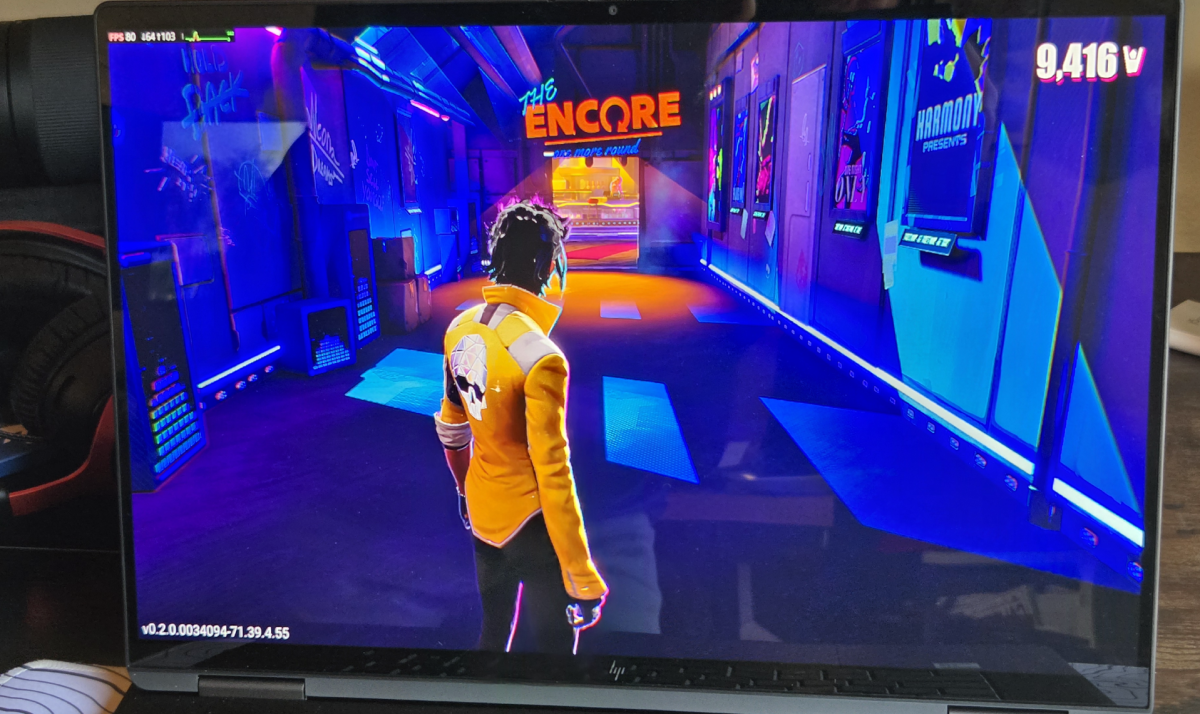
While that display isn’t as big or as fast as the most bombastic gaming laptops on the market, it’s more than serviceable, and better than many that stick to LED panels. You might not like the glossy finish, but that’s just standard for non-gaming laptops. The keyboard is also pretty darn good, which is more than you can say for at least some of these initial RTX Spark designs. Naturally if you don’t like either you can plug it into any monitor you like. Using both HDMI and USB-C and connecting it to 5K displays it showed no issues.
Michael Crider/Foundry
That said, with a big, thirsty 99.9 watt-hour battery, you might not be able to get this thing to plug into even a gaming monitor with a single cable. At least not for long. Running through benchmarks on battery, just to see how long I could push it, the laptop blasted through the maximum size allowed on an airliner in just about an hour flat. It looks like even Nvidia can’t design a chip that combines gaming power with endurance.
The HP laptop comes with 32GB of RAM at this, its base level. The Spark laptops have up to 128GB of memory, which is what pushes those prices towards used car territory. So you might be wondering if all that extra memory — shared dynamically between the GPU the system, as with AMD’s high-powered chips with integrated graphics — can be put to use in games. I wondered too. Gosh, aren’t we both clever?
Brad Chacos/Foundry
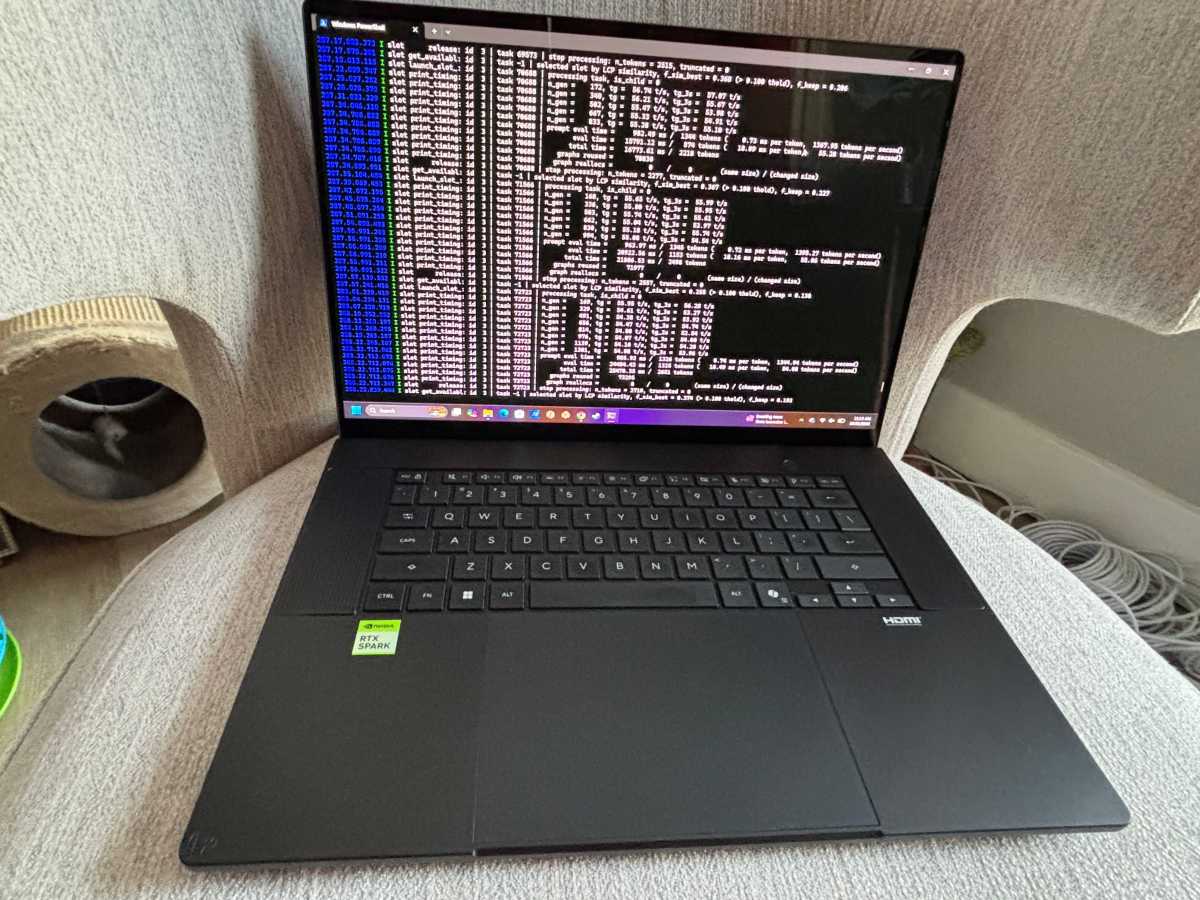
The answer is, apparently, no. I asked Brad Chacos to run identical benchmarks on his Asus laptop, with four times the RAM. They came out with no statistical differences. There might be Spark laptops that run the same tests with worse performance — some of the less ridiculously expensive variants come with “only” 24GB of memory, which again, has to be shared between system and graphics. But from a gaming perspective, it won’t benefit you to splash out on 48GB, 64GB, or 128GB, at least not without games that are specifically designed to take advantage of an unreasonable amount of memory.
It’s possible that Nvidia could substantially improve the gaming performance in a short amount of time after launch. We saw the same thing happen when Intel debuted its own discrete graphics cards, and some quick driver tuning improved things markedly. But presumably Nvidia has already put as much time and money into this as it thinks is prudent. So I think it’s also possible that the only major boosts in performance come from the developer side of things, at least in the short term. But really, virtually no games require anywhere near the sort of massive memory pool available in RTX Spark laptops. It’s overkill.
HP wants $3200 for the Omnibook 16 Ultra. Even in the nightmare that is laptop shopping in 2026, that is a lot of money. (And a lot of money to spend on a laptop that’s still pre-loaded with McAfee bloatware, but that’s another article.) More pertinently, it’s at least a thousand bucks more than you should spend for a laptop with this level of gaming performance.
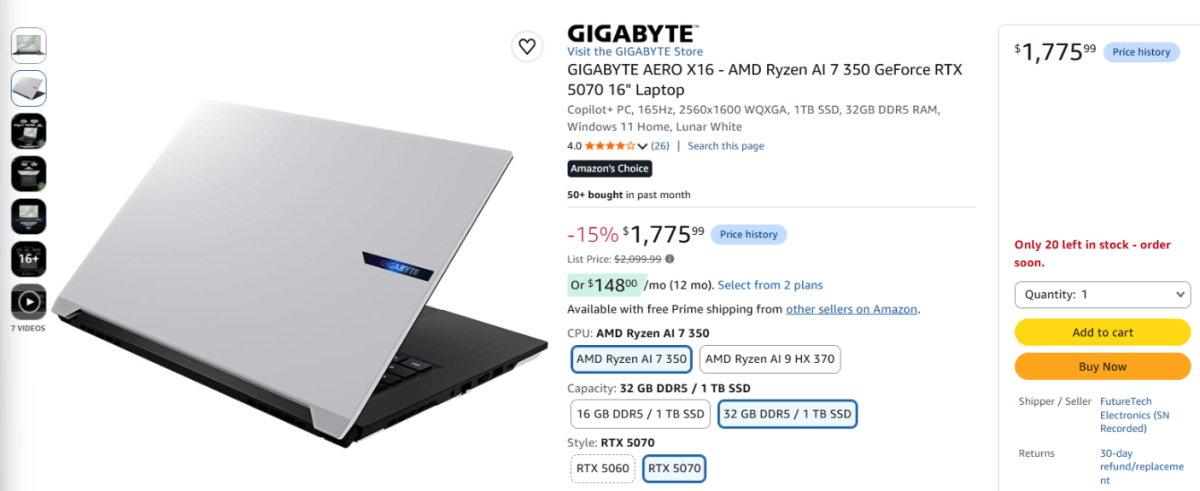
Doing some online shopping in mid-October — because these things are, sadly, in constant flux — I found similarly-equipped laptops with a discrete RTX 5070, 32GB of RAM, and a 1TB SSD for a little above the $2000 mark. Some are a little more, particularly if you’re looking for a nice OLED screen. The MSI compared above is $2300. Some are significantly less, like this Gigabyte Aero X16, going for under $1800 when I checked.
Amazon
The laptop with a discrete card is big and chunky. It’s thicker than the HP despite having a smaller battery. But it’s actually lighter, 1.9kg/4.2 pounds versus 2.2kg/4.9 pounds for the HP. Again, the battery is probably part of that, plus a nice sleek metal chassis.
I can’t speak for everyone. But if I’m looking for a laptop primarily to play games, and knowing I’m going to be using a mouse, keyboard, and external monitor a lot the time, I can forgive a little bulk for $1500 in savings. That’s enough to buy a very nice monitor, after all. If you take it in the other direction, you could get a laptop with considerably more graphical power for the same price.
So yeah, this laptop and its stablemates aren’t for gamers. Or at least, they’re not for gamers who are looking for a good value. If you want a laptop that can play plenty of games and be thin, and possibly even light if you go for a smaller screen, that might do it.
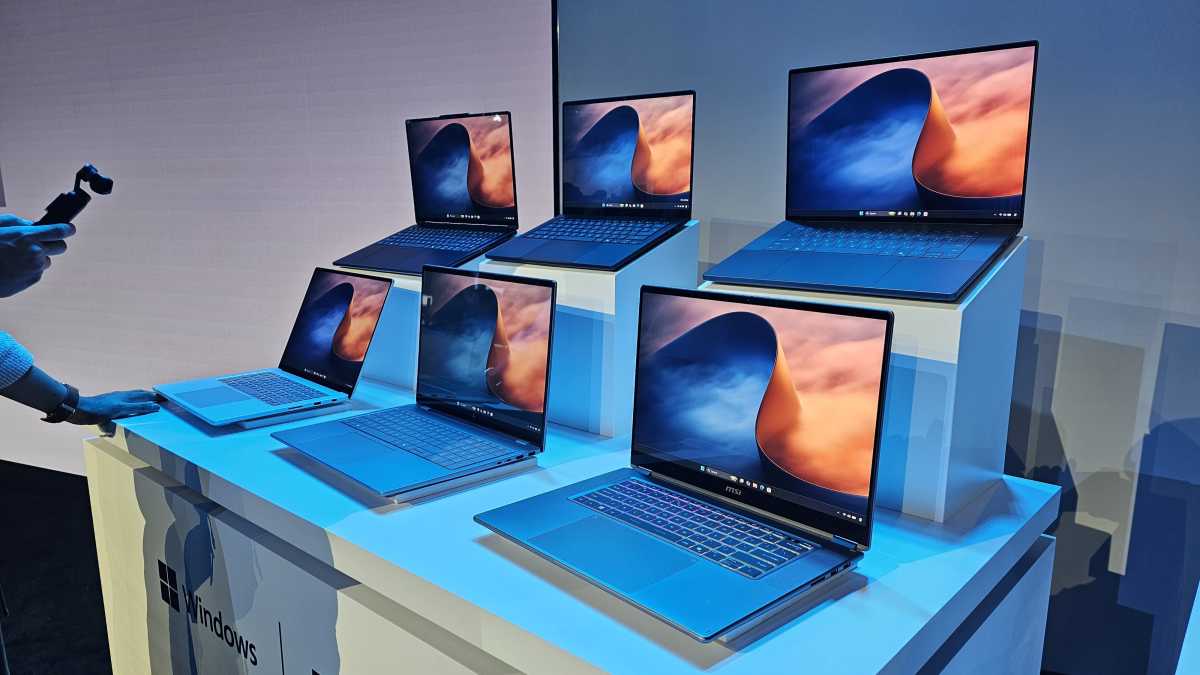
It might make sense if you’re already in the market for a beefy, powerful laptop for other purposes — running local AI agents, naturally, but possibly other workstation-class uses — and see the gaming prowess as icing on the cake. That would make the RTX Spark a true and compelling alternative to Macbook Pro, at least at some configurations…though it’s worth noting that Apple’s chips are still blazing fast at single-core performance.
Mark Hachman / Foundry
So you could see the gaming capabilities of these RTX Spark laptops as the icing on the cake. An expensive cake, with multiple tiers, and probably baked by someone with lots of accents in their name. It’s a definite bonus, and I could see it swaying some buyers away from a MacBook Pro.
But for gamers, and gamers without an unlimited budget? No, stick with conventional gaming laptops. The future looks bright for integrated graphics and PC gaming on Arm. But at the moment, it’s also a long way away.


